
Pets express their needs through signals that most owners miss or notice too late. A cat that licks its paw repeatedly, a dog that sleeps more without apparent reason, a rabbit that stops nibbling on its toys: these subtle changes often indicate discomfort that has been present for weeks. Understanding pets better starts with accepting that their silence is not a sign of good health.
Micro-signals of pain in dogs and cats: what behavior reveals
The World Small Animal Veterinary Association (WSAVA) updated its pain guidelines in 2024. The conclusion is clear: many chronic pains remain underdiagnosed, even in animals regularly monitored by a veterinarian. The problem does not stem from a lack of care, but from a framework that focuses too much on obvious symptoms (clear limping, whining, refusal to eat).
The signals to watch for are more discreet. In dogs, a change in resting posture, excessive localized licking, or unusual isolation deserve attention. In cats, a change in sleep cycle or a sudden refusal to jump on a piece of furniture they previously frequented can indicate joint pain. These micro-signals go under the radar because they do not provoke cries or agitation.
Specialized resources like bloganimaux.com detail these behavioral indicators by species, allowing for refined observation even before the veterinary consultation.
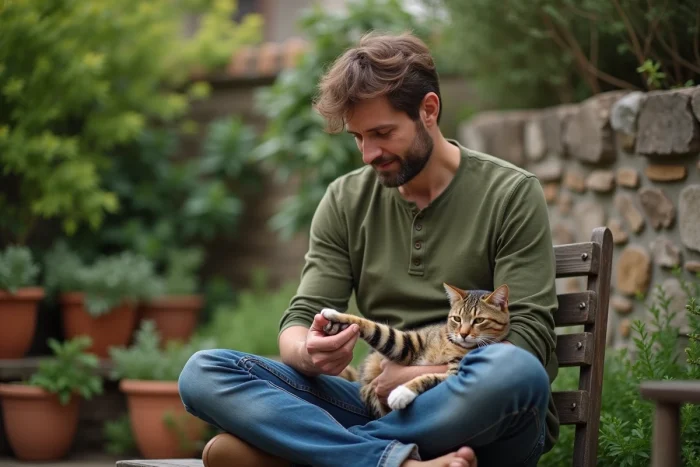
The difficulty also lies in the fact that each animal develops its own compensation strategies. A dog suffering from arthritis may simply slow down its walk without ever limping, giving the impression of normal aging. An animal that compensates for its pain does not show it, and this is precisely what delays diagnosis.
Behavioral needs of animals: what the regulations change
Since 2024, several European countries and Quebec have strengthened their texts on animal welfare by explicitly incorporating the notion of behavioral needs. The nuance is significant: the obligations of owners are no longer limited to providing food, water, and shelter. They now cover exploration, chewing, scratching, or simulated hunting according to the species.
For an indoor cat, this concretely translates into the need to provide scratching posts, high observation points, and play sequences that simulate predation. For a dog, outings are not enough if they consist solely of a short-leash walk on the same sidewalk.
- The cat needs vertical and horizontal scratching posts, hiding spots, and chase toys that activate its hunting instinct.
- The dog requires walks with free olfactory exploration (sniffing is a cognitive activity, not a whim).
- The rabbit must have daily running space outside its cage and objects to chew on to wear down its continuously growing teeth.
A well-fed and housed animal is not necessarily one whose needs are met. The legal recognition of behavioral needs marks a turning point in how owners must consider their companion’s daily life.
Anxiety disorders in urban environments: the post-telework effect on dogs and cats
The Journal of Veterinary Behavior dedicated a special issue to post-pandemic behavioral disorders in 2023. The results point to a marked increase in anxiety disorders in dogs and cats living in dense urban environments. The main cause identified: the end of full-time telework has abruptly reduced human presence at home, as well as the duration of outings and active play.
The manifestations are varied. Destruction of objects, prolonged vocalizations in the owner’s absence, compulsive licking leading to hair loss. These behaviors do not stem from a lack of training. They reflect distress related to a sudden change in lifestyle rhythm that the animal has not had time to integrate.

Field reports vary on this point: some dogs adapted within weeks, while others developed persistent disorders several months after their owner’s return to the office. Breed, age at the time of change, and socialization history play a role, but no typical profile predicts an animal’s vulnerability to separation anxiety.
Concrete adaptation strategies for daily life
Gradually extending absence periods (in fifteen-minute increments) remains the most documented method. The idea is to desensitize the animal to the owner’s departure without creating a spike in stress.
- Leave a recently worn garment in the dog’s bedding to maintain an olfactory presence.
- Offer a food-dispensing toy at the moment of departure, associating absence with a positive activity.
- Avoid prolonged departure rituals (words, heavy petting) that signal to the animal that an unusual event is about to happen.
- For cats, installing a synthetic pheromone diffuser in the main room can reduce stress-related urinary marking behaviors.
These approaches do not replace a veterinary behavioral assessment when disorders have been present for several weeks. Compulsive licking that has caused skin lesions requires medical attention before any behavioral work.
Understanding a pet requires less intuition than methodical observation. Regulatory advances and recent behavioral data offer concrete guidelines, provided they are applied daily rather than read once. Animal welfare is built on the consistency of small adjustments, not on large one-time decisions.