
A certified trainer does not necessarily promise spectacular results. In many centers, self-taught profiles sometimes know better how to train a group than those who have followed traditional paths. The real trigger for progress, for two classes of equivalent level, often lies more in the personality of the facilitator and their way of conducting the training than in the materials used.
Feedback is clear: learners expect the ability to create a climate of trust long before they demand an extensive CV or an encyclopedic mastery of the program. Adapting to what happens in real-time, sensing the group, maintaining direction… this is what makes the difference and anchors collective motivation.
Why the personality and expertise of the trainer change everything in animation preparation
Behind the walls of a room, it is impossible to hide behind a polished presentation or a handout. What matters is the authentic presence of the trainer, their way of investing in the subject, sensing the atmosphere, and responding appropriately. Those who know how to listen, bounce back, and readjust make each participant an active player. When a facilitator combines adaptability and a desire to advance the entire group, everyone feels in their place, ready to move forward.
The best never mechanically apply a plan: they improvise when needed, juggle with the unexpected, and are willing to revise their method for each cohort. Bringing together very different profiles, waking up a demotivated room… nothing is automatic; everything is built through interaction, through careful observations and back-and-forth with participants. Preparing the session carefully, analyzing expectations, tracing a solid thread of continuity remains the foundation. But often, everything hinges on the ability to instill a dynamic that engages everyone through the facilitator’s personality.
The question of the evaluation of trainers in animation preparation now takes on a central dimension. Observing the facilitator in a real situation, surveying learners, measuring the concrete effects of the session: these are all levers to maintain a quality standard and advance the entire field. Whether independent, under a portage scheme, or employed by a certified structure, facilitators are judged as much on the collective effect they create as on their technical expertise. This approach nourishes the entire training offering in animation.
The animation techniques that make a difference on a daily basis
There is no one-size-fits-all recipe: it is the ability to adjust, to sense the rhythm, and to change methods that distinguishes seasoned trainers. They navigate agilely between several pedagogical methods. Here are the main axes that structure progression:
- The affirmative approach to provide direction and a secure framework
- The interrogative approach to trigger personal reflection and collective analysis
- The active approach, which concretely involves learners in the content
- The demonstrative approach, an ideal ground to show and materialize a concept
It is also essential to choose the right combination and enjoy the freedom to adapt the pace according to the group’s reactions.
Effective animation relies on varied techniques. Real-life stories, well-placed storytelling, and practical cases immerse concepts in reality. Brainstorming frees speech and challenges certainties, role-playing brings concepts to life, simulation or mind mapping structures ideas while involving everyone. Round tables, workshops, and the use of interactive tools: everything is good to pace the session and transform the room into a laboratory of ideas. The SAVI method (Security, Actor, Valorization, Involvement) ensures that no one is left out and maintains sustained attention.
A few levers further amplify enthusiasm and the capacity to learn:
- Ludopedagogy: games, dynamic quizzes, and serious games promote memorization and conviviality.
- Digital tools: whiteboards, videos, LMS, augmented reality, podcasts… the format adapts to the flow of remote or in-person.
Regular evaluation of the session, listening to feedback, all this allows for step-by-step adjustments to the pedagogical approach. A change of pace, a dynamic transition, and participation takes off again. What makes the difference? Anticipating, maintaining mental flexibility, encouraging the richness of the collective. Accurate positioning, clear instructions, and valuing acquired knowledge: this is what resonates in a well-facilitated training.
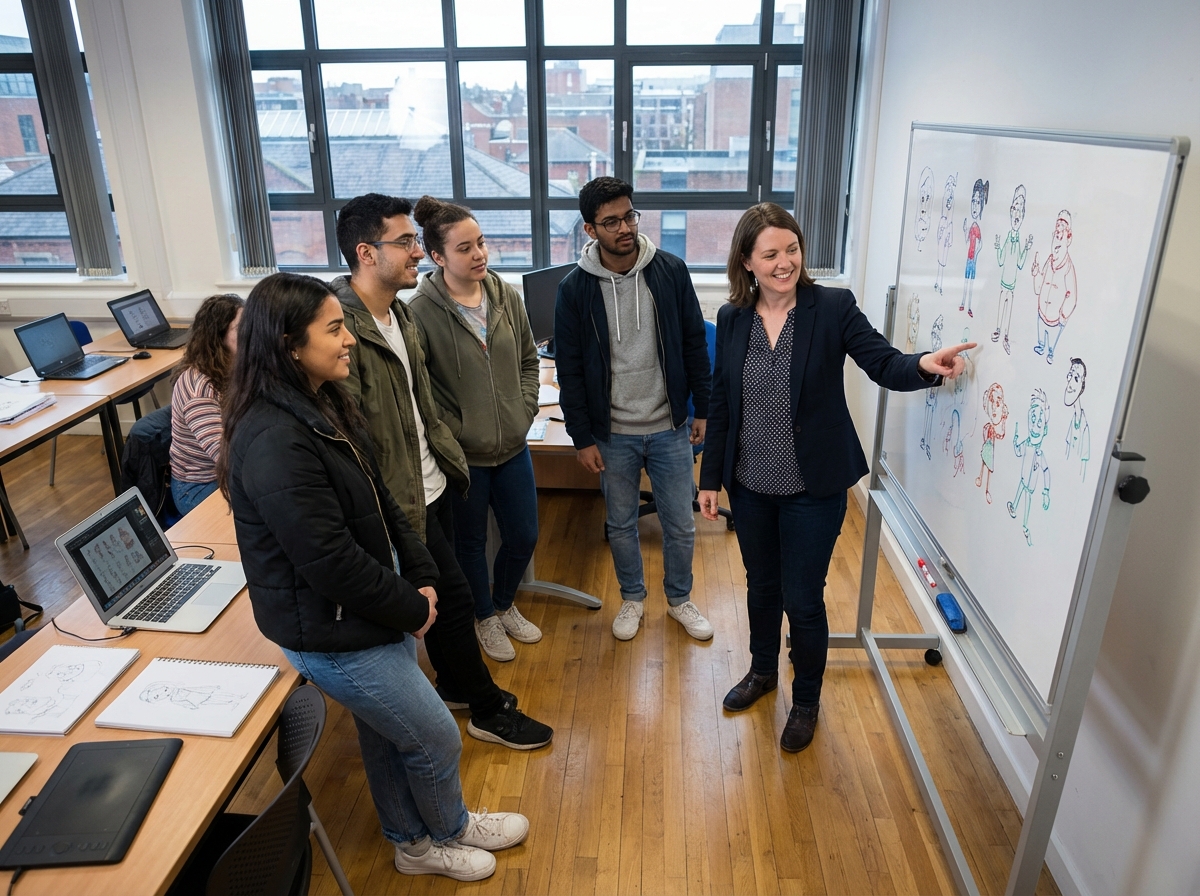
Sharing experiences: an accelerator for inspiring and progressing as a trainer
In a field that is constantly evolving, sharing one’s experiences is not just a vanity: it is the fuel for true professional evolution. Those who leave a mark choose to tell their stories without artifice: their doubts, their failures, as well as their greatest discoveries. The use of storytelling adds depth to theory, opens discussions, and puts at ease those who are still hesitant to take risks.
Saying what worked or didn’t, recounting a case study lived, inviting trainees to share in turn: behind these small steps, training transforms into a lively workshop, where each story becomes a tool for progress. This posture encourages memorization, ownership, and makes the collective the engine of progress.
Collecting feedback, at the end of the session or in the moment, guides the next steps and deepens reflection. Feeding a professional network, publishing feedback on LinkedIn, participating in exchanges or following discussion groups extends this sharing. This is where the profession enriches itself, weaves connections, and invents new codes.
In the end, no one grows alone. Listening to other voices, confronting one’s visions, drawing inspiration from a podcast or video, reading outside of one’s comfort zone: all this sharpens the ability to innovate, reinvents practice, and infuses energy. Sharing always moves further than any method: the mark we leave transcends the session, circulates, inspires, and challenges what seemed established.