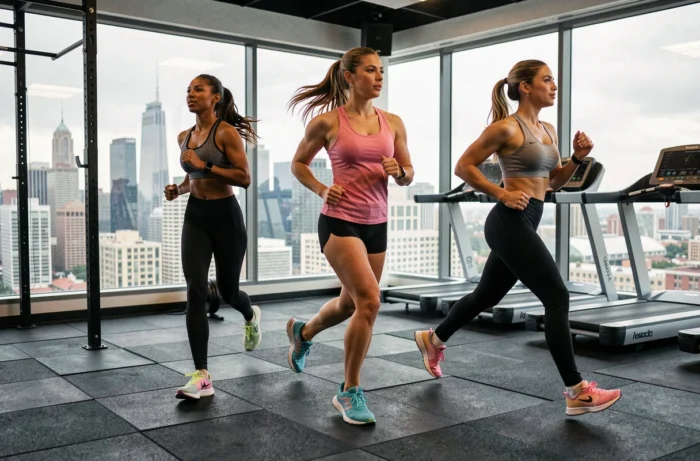
Women’s fitness shoes with good cushioning vary depending on the type of training practiced. A highly cushioned model is suitable for cardio with repeated impacts but can become a hindrance under heavy loads. This ranking is based on a central criterion: the compromise between shock absorption and stability in the gym. We have selected ten models that each meet a specific use, from HIIT to cross-training to machine work.
1. Nike Metcon 9
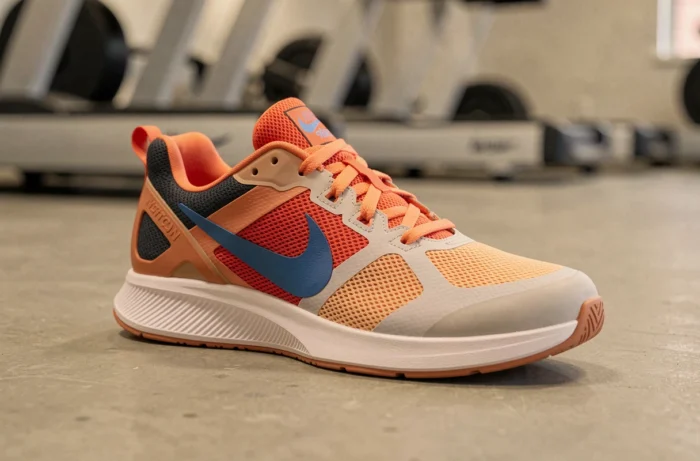
The Metcon 9 remains the reference for women’s cross-training. Its flat and rigid sole at the back provides a solid anchor during squats and deadlifts, while the React foam at the forefoot absorbs impacts during box jumps and short sprints.
The reinforced heel clip prevents the foot from sliding laterally during explosive movements. We recommend this model for practitioners who alternate strength exercises and cardio sequences in the same session. However, the low-drop sole limits comfort during long runs.
2. Reebok Nano X4
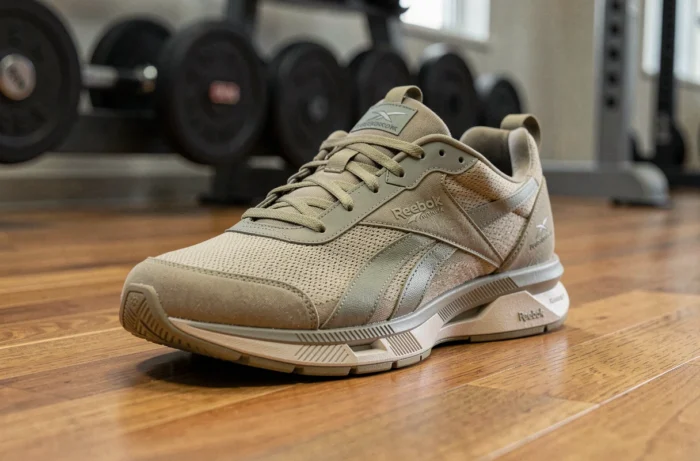
The Nano X4 features a differentiated density sole: firm under the heel for stability under load, softer under the forefoot for dynamic comfort. This hybrid architecture allows for a seamless transition from a clean to a burpee without feeling a significant compromise.
Compared to the Metcon 9, the Nano X4 offers a slightly wider forefoot, which is better suited for feet with a flared shape. The woven Flexweave provides lateral support without pressure points. A relevant choice for those who find the Metcons too narrow on the top of the foot.
To delve deeper into the comparison between these models and other references, the women’s fitness shoes on Point Contre Point detail the technical characteristics of each pair.
3. Nike Free Metcon 5
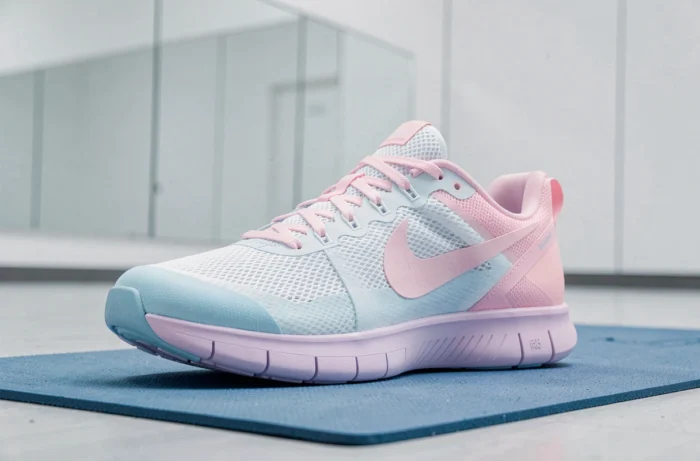
The Free Metcon 5 merges the flexibility of the Free range with the stability of the Metcon. The deep grooves on the front of the sole allow for natural foot flexion during lunges and high knees while maintaining a rigid heel for strength movements.
This model is suitable for cardio-oriented training with a moderate strength component. The foam is softer than that of the pure Metcon 9, making it more comfortable for longer aerobic sessions.
4. HOKA Solimar
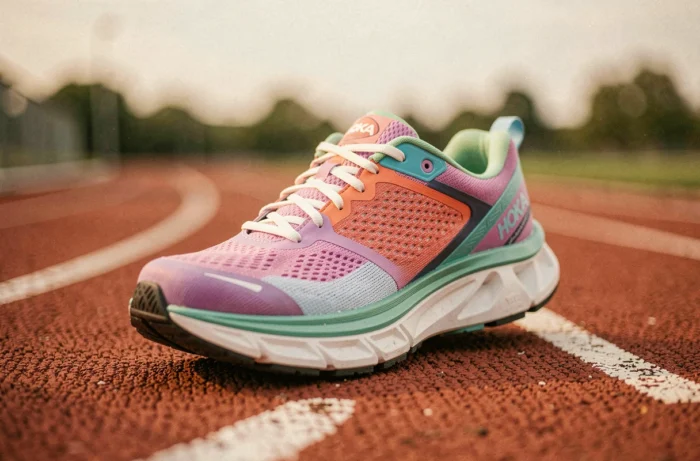
HOKA applies its expertise in maximum cushioning to indoor fitness. The Solimar offers thick cushioning under the heel that significantly reduces joint fatigue during high-impact group classes (step, aerobics, Zumba).
The thick cushioning improves comfort at the expense of reduced stability under load. This model should be avoided for heavy squats or deadlifts. However, for practitioners who attend cardio classes several times a week, the Solimar effectively protects the knees and ankles.
5. Nike SuperRep Go 3
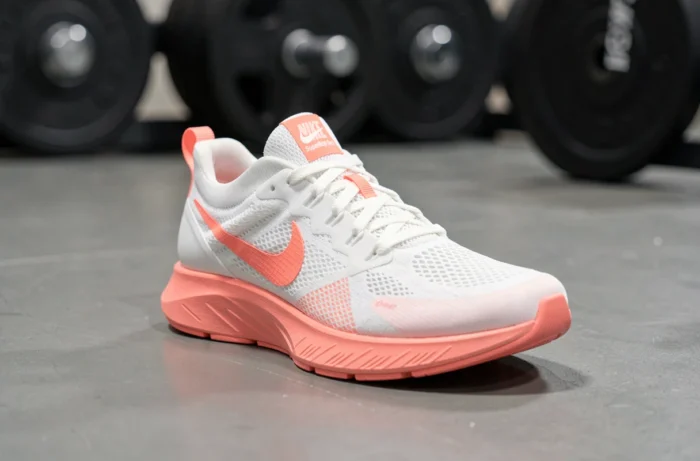
Designed specifically for group classes, the SuperRep Go 3 features a supportive arch under the plantar arch and a curved forefoot sole that facilitates quick transitions. The padding at the ankle collar reduces friction during repetitive lateral movements.
The cushioning foam remains moderate in thickness, sufficient to absorb jumps without creating instability. It is a specialized model that excels in its domain but lacks versatility for weight training.
6. Puma Fuse 3.0
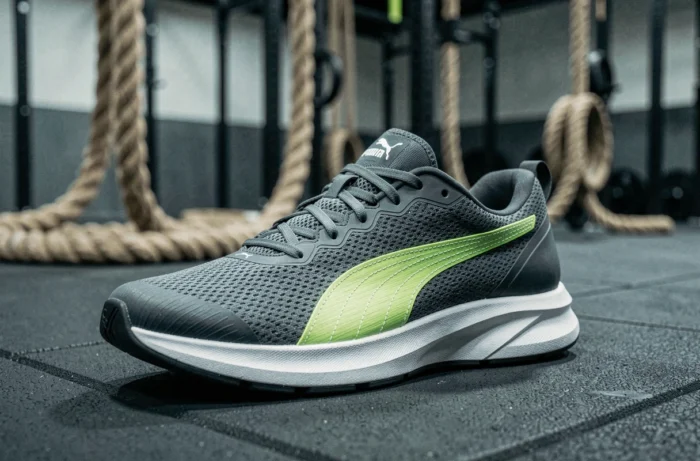
The Fuse 3.0 features a full rubber sole with a low profile that ensures a direct connection with the ground during lifts. The breathable mesh on top maintains good ventilation, a point often overlooked in training shoes.
The cushioning is intentionally limited to the bare minimum: just enough to absorb a jump, not enough to compromise proprioception. This technical positioning suits practitioners of weightlifting and cross-training who prioritize ground feel.
7. Under Armour TriBase Reign 6
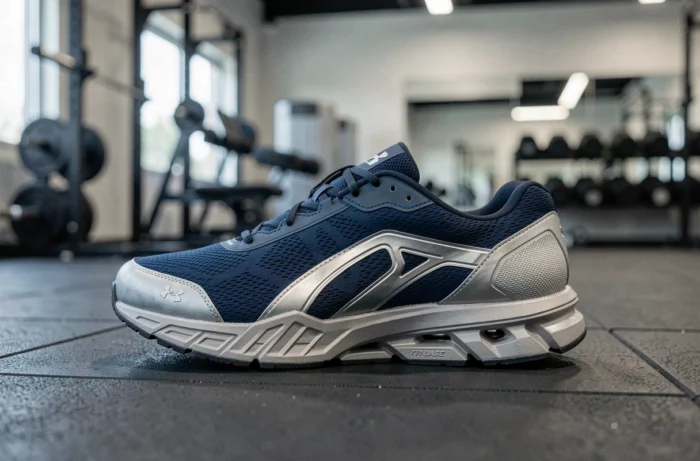
The TriBase technology relies on three points of contact with the ground (heel, external metatarsal, internal metatarsal) that maximize the contact surface. This design improves balance during unilateral movements such as Bulgarian split squats or pistol squats.
The external TPU reinforcement protects the midfoot during rope climbs. The cushioning remains understated, focused on performance rather than passive comfort. A technical model aimed at experienced practitioners.
8. Adidas Dropset Trainer 3
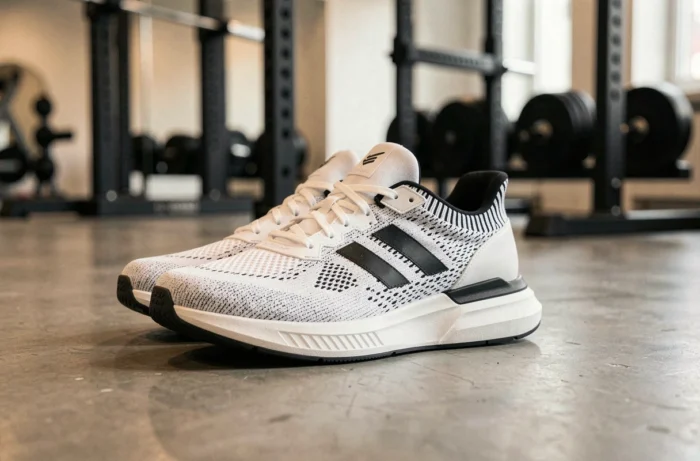
Adidas positions the Dropset Trainer 3 as a fitness-weightlifting hybrid. The sole features a slight elevation at the heel that facilitates a low squat position while remaining flexible enough at the front for dynamic exercises.
The criteria that distinguish this model include:
- Elevated heel compared to the forefoot, favorable for deep squats without perfect ankle mobility
- Reinforced upper at the midfoot for lateral support
- Continental rubber outsole that grips smooth gym surfaces
9. New Balance Minimus TR V2
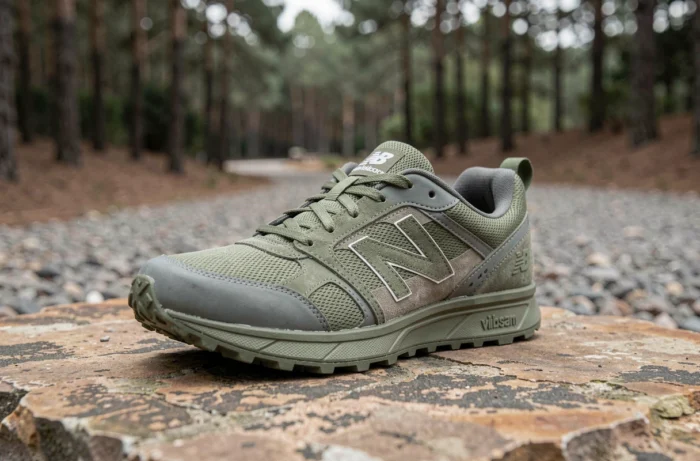
The Minimus TR V2 adopts an almost minimalist profile with a very low drop. This choice promotes a natural foot posture and increased muscle recruitment in the arch and calves.
The cushioning is intentionally reduced, which excludes this model from high-pliometric training. However, for circuit training, ground work, and pure weightlifting, the Minimus offers a sense of control that is hard to match in this price range.
10. ASICS Gel-Pulse 15
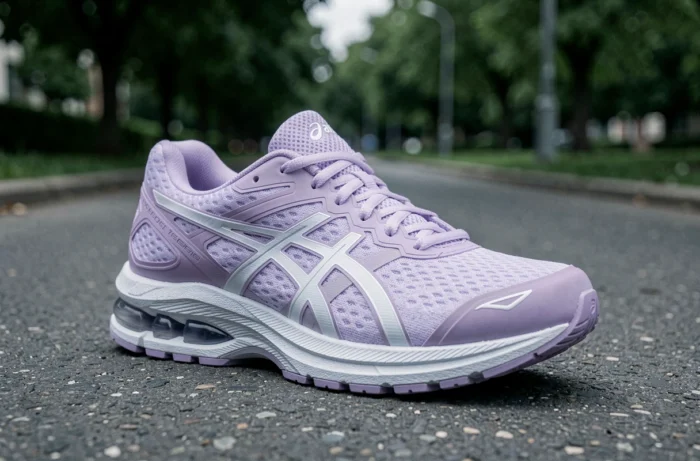
The Gel-Pulse 15 is not strictly a training shoe, but its Gel system at the rear foot makes it a solid choice for indoor cardio. Treadmill, elliptical bike, rowing machine: impacts are well absorbed without excessive foam.
The ASICS fit is known for its fidelity to narrow to medium feet. Practitioners with wide feet will need to go up half a size or opt for the Nimbus range, which offers more volume. The Gel-Pulse 15 is suitable for long cardio sessions where joint comfort takes precedence over responsiveness.
The choice of a cushioned fitness shoe primarily depends on the dominant type of session. Models with flat and firm soles (Metcon 9, Nano X4, Fuse 3.0) protect stability under load. Models with thick foam (Solimar, Gel-Pulse 15) prioritize joint comfort in cardio. Combining two pairs according to sessions remains the most effective strategy to protect your joints without sacrificing performance.