Glass wool dominates the insulation materials market in France, while asbestos, banned in 1997, continues to haunt the walls of buildings constructed before that date. On one side, a modern and ubiquitous insulator; on the other, a once-admired mineral fiber, now feared. Despite their past or current presence in insulation, these two materials differ in their nature, composition, and especially in the risks associated with their use.
Legal requirements clearly separate their management. Working in contact with asbestos involves rigorous protocols, governed by law. Understanding precisely what differentiates glass wool from asbestos is essential to avoid unnecessary exposure, comply with regulations, and ensure safety on renovation sites.
Glass wool and asbestos: origins, composition, and uses in construction
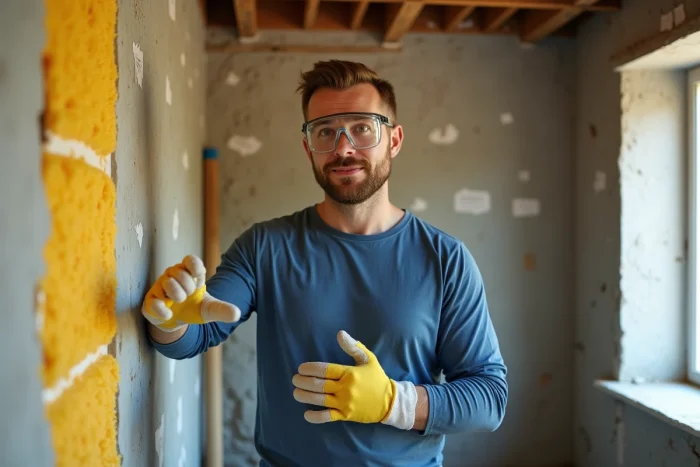
Glass wool is made from a mixture of heated sand and recycled glass. This material comes in flexible rolls or panels, easy to cut and install in attics, walls, partitions, or under roofs. Its fibrous structure, yellow or pale green color, and versatility have made it the preferred choice for thermal and acoustic insulation for several decades.
Asbestos, on the other hand, comes from certain natural minerals. Until the 1990s, this fiber invaded the construction sector, integrated into a range of products: corrugated sheets, floor tiles, false ceilings, spray coatings, or ducts. Valued for its fire resistance, it is now hunted and excluded from all new construction projects since its danger has been proven. Even today, it survives in many old buildings.
Recognizing one or the other at first glance can sometimes be tricky, especially in attics or poorly identified technical rooms. To avoid mistakes, the guide the truth about glass wool and asbestos details reliable identification criteria and helps avoid any unpleasant surprises during renovations.
To clarify the distinction in practice, here are the notable differences to observe:
- Glass wool is made from sand and recycled glass, recognized by its generally yellow or greenish fibers and is easily cut during work.
- Asbestos is grayish, more brittle in appearance, and was primarily used for its fireproof properties before its toxicity was finally recognized.
- In any building constructed before 1980, it is still common to find asbestos in wall panels, technical ducts, or certain floor tiles.
What are the health risks and regulatory obligations to know?
As harmless as it may seem to the naked eye, asbestos is a silent enemy. At the slightest shock, drilling, or sawing, its microscopic fibers are released and can end up in the lungs. Diseases may only appear decades after exposure: asbestosis, cancers… The danger does not manifest immediately, but the consequences are severe.
Exposure to glass wool, in comparison, mainly causes temporary irritation during handling: skin itching, transient respiratory discomfort, redness, or eye stinging. Wearing a disposable mask, gloves, and protective goggles is sufficient to limit these inconveniences. With a bit of caution during installation or removal, the risk remains contained.
Property owners of buildings constructed before 1997 must remain vigilant. Asbestos detection must be carried out by a certified diagnostician. If this material is identified, it is no longer a matter of DIY: only a licensed asbestos removal team can intervene, under strict controls and with regulated disposal.
To ensure everyone’s safety and avoid pitfalls, some practices should be followed when handling insulators:
- If there is any doubt about the presence of asbestos, it is imperative to pause the work, request a professional assessment, and equip oneself with a disposable suit, a fine particle filter mask (P3), and wrap-around goggles at the slightest contact.
- For glass wool, using thick gloves, a dust mask, and protective goggles is advisable; one should also avoid generating too much dust when cutting.
- In all cases, it is important to ventilate the area well, wash thoroughly after intervention, and dispose of waste in specialized channels, never with regular household waste.

Choosing safe insulation: current alternatives and tips for a healthy habitat
Renovating today means aiming for protective materials for all occupants and effective against both cold and heat. Glass wool still has its place, but other insulators are gaining a growing share thanks to their healthy composition and low environmental impact.
Here is an overview of notable solutions for effective insulation that respects indoor air quality:
- Wood fiber panels, valued for their thermal insulation capabilities, preserving coolness in summer and regulating humidity.
- Hemp, which combines minimal ecological impact with excellent performance in both acoustic and thermal aspects.
- Some innovative insulators made from textile or plastic recycling, diverting waste to create useful materials for the long term.
Choosing an insulator cannot be taken lightly: suitable products, serious installation, and safety are essential to ensure comfort, energy savings, and peace of mind on construction sites.
Differentiating glass wool from asbestos is to refuse any compromise with health. In every choice lies the promise of a safer habitat and a future free from the mistakes of the past. Walls remember everything; it is best to ensure they protect those who live within them.