The humidity level rises quickly in a poorly insulated mobile home against the cold. The walls bead up, condensation settles in, the breeze finds every crack, and the feeling of chill never disappears, despite vigorous heating. It cannot be said enough: a well-placed thermal cover or a simple foam seal can sometimes radically transform the atmosphere, where the official discourse of manufacturers suggests settling for the existing conditions.
Behind every door, the reality changes: a worn seal or a poorly closed window is enough to create pockets of drafts and temperature variations that hit immediately. No need for a large investment or to redo everything from scratch: simple tricks are enough to retain heat and enjoy a true refuge in winter.
Why does the mobile home let heat escape?
With its lightweight structure and relatively thin panels, the mobile home is inherently sensitive to the cold. Set on blocks, often exposed to drafts, it struggles to match the insulation of a traditional house. The slightest flaw allows frost to enter. And ventilation, necessary to avoid humidity, quickly becomes the entry point for the cold. During the harshest months, the weaknesses of the initial design become evident.
According to the CSTB, the roof allows nearly 30% of heat to escape. The floor, on the other hand, lets almost 15% slip away. These losses are unforgiving: day after day, the indoor atmosphere changes without mercy.
- As soon as the thermometer drops, the pipes risk freezing, causing inconvenient breakdowns
- Humidity eventually stains the walls or sneaks into corners that have been forgotten to ventilate
- Interior materials suffer from temperature fluctuations that accelerate their wear
When insulation is not optimal, several problems can arise very quickly:
Choosing an insulated mobile home for winter on Maisonisor makes a noticeable difference. Gone is the feeling of living in a cabin: thermal stability improves, energy bills decrease, and the interior remains welcoming even in gusts of wind or snow.
Insulation, ventilation, heating: focus on concrete solutions
Making your mobile home more comfortable during the cold season means choosing the interventions that matter.
Adding mineral wool under the floor, placing foam in the linings, or applying insulating film on the windows—these actions significantly enhance the feeling of warmth. Doubling curtains with thermal models, installing solid shutters, reinforcing every seal around windows and doors—these are the things that make an immediate difference, especially when the mercury decides to plummet during a stay at the campground.
Regarding ventilation, vigilance is essential. Blocked vents are a bad idea: they lead to rising humidity and condensation on the walls. A mechanical ventilation system, a simple extractor, or well-thought-out natural circulation allows for air renewal, provided the flow is never completely stopped.
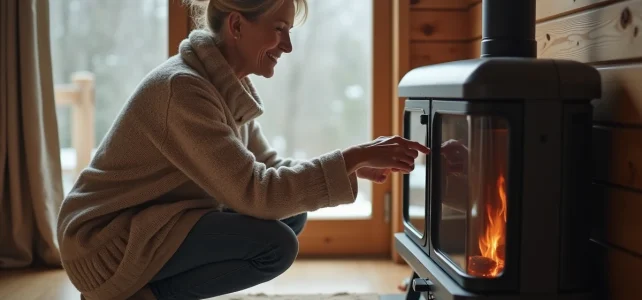
On the heating equipment side, several options are available. Electric heating is easy to adjust, but be cautious of the bill. Propane gas heats spaces quickly, but requires maintenance to ensure safety. Some now opt for a pellet stove, valued for its constant heat and autonomy, as long as installation rules are strictly followed.
Retaining heat: actions and reflexes for a serene winter
As soon as the air cools, the routine changes. Purging the pipes, inspecting the condition of the seals, and placing moisture absorbers in less ventilated rooms: it’s better to think about this early than to suffer from condensation and various issues.
A regular check of the roof and gutters is necessary: the smallest infiltration or a misplaced piece is enough to let the cold in. To enhance insulation, nothing beats a thick rug at the entrance, an insulating mattress pad in the bedroom, or blackout curtains on all windows. At nightfall, closing shutters and double curtains prevents heat from escaping.
Here are some habits to adopt to maintain a welcoming climate when it’s really cold outside:
- Ventilate widely once a day for about ten minutes to limit humidity without freezing the entire room
- Frequently check ventilation grilles to keep them clear
- Place a hot water bottle in the bed or wrap yourself in a very thick duvet at night
- Layer technical clothing and adjust your outfit for each room according to the activity
With the help of forecasts from Météo France, it becomes easier to adjust heating before a cold snap returns or to revise habits accordingly. The accumulation of good practices matters much more than buying gadgets: in winter, it’s the daily rigor that makes all the difference.
Lasting warmth in a mobile home is not a utopia: it is built, action by action, curtain by curtain. When night falls and the countryside fades behind the window, it’s the certainty of a cozy interior that makes all the difference.