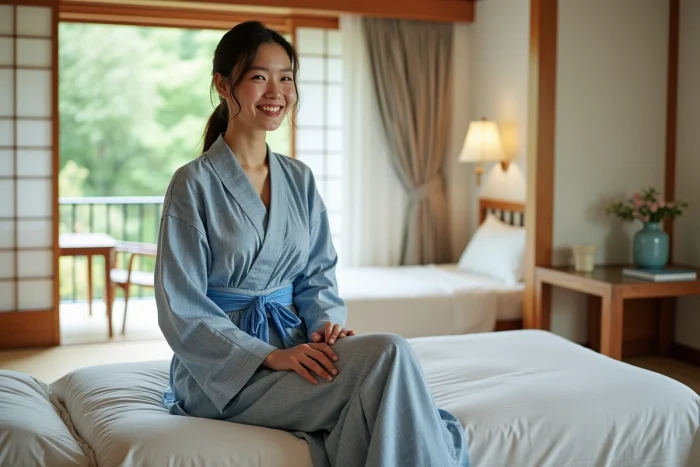
A pajama, carefully folded on the bed of a Japanese hotel, is not an invitation to slip it into your suitcase. Most of the time, it belongs to the establishment, loaned for a night or a few days, but intended to stay on site, just like the fluffy towel or the elegant bathrobe. In high-end hotels or traditional ryokans, the rule is clear: the garment must be returned, no discussion.
However, some hotels, especially in highly touristy areas, have sniffed out the opportunity: they offer for sale pajamas identical to those provided in the room. Sometimes, the item is negotiated at the reception, sometimes through a small catalog. It all depends on the hotel’s policy, the type of accommodation, and the target clientele. If the desire to bring back a textile souvenir arises, it’s better to ask before slipping the pajama into your belongings.
The pajama in Japanese hotels: between tradition and modern comfort
In Japanese hospitality, the pajama holds a special place. Upon arrival, a yukata pajama awaits the visitor: placed on the bed, it invites one to immerse in the local way of life, whether sleeping in a historic ryokan or an ultramodern capsule hotel. This garment is not just a simple accessory: it embodies the attention given to the guest’s privacy, whether traveling alone or with family, for business or out of a taste for the elsewhere.
In a traditional Japanese ryokan, the yukata accompanies beyond the room. It is worn in the communal bathrooms, sometimes at dinner served on tatami, or during a nighttime stroll through carpeted corridors. The material, usually cotton, ensures comfort in all seasons. The capsule hotels, emblems of Japan’s major cities, perpetuate this ritual even in the minimalist space of an urban night.
The pajama, a mundane item elsewhere, becomes a cultural marker in Japan. Here, experience takes precedence over possession: wearing the garment, enjoying its comfort, but leaving it behind. For those who would like to keep this souvenir, it’s better to check the rules displayed in the room or ask the staff. To delve deeper into the question or avoid any missteps, the pajama in Japan on UKR Travel offers useful insights on the subject.
Can you really leave with the pajama provided during your stay?
The question often arises: can you take the pajama provided in the room after a stay in a Japanese hotel? The yukata, a lighter version of the kimono, is part of the decor, but its final destination is not always clear.
In almost all hotels, it is impossible to consider the pajama as a free souvenir. It is listed among the non-recoverable items: like bathrobes or sheets, it is loaned for the duration of the stay only. Only certain items deemed consumables, such as toothbrushes, razors, and disposable slippers, can be taken without charge. The standing of the establishment or the category of the room generally does not change this rule, and it is rare for a yukata pajama to be designed as an item to take home.
Here’s what to remember to avoid any misunderstanding:
- The pajama provided in a ryokan or capsule hotel remains the property of the establishment.
- Additional charges may be deducted from the credit guarantee in case the garment goes missing.
Those who really want to bring back a Japanese pajama will sometimes find a specific version for sale, different from the one provided in the room. Just ask the reception staff: they will know how to guide you to the simplest solution, with no risk of error when settling the night at the hotel. The UKR Travel guide remains a valued resource for anticipating such details during a stay in Japan.
Understanding local customs and sharing your travel anecdotes
Traveling in Japan means accepting to rethink your notions of comfort, respect, and the rules of communal living. In Japanese hotels, every item, from the yukata pajama to the simple towel, follows a logic of civility. The experience of the ryokan or capsule hotel goes far beyond the confines of the room: a must-pass through the communal bathroom, sharing breakfast or a moment in the common areas, all contribute to a culture of hospitality, discreet yet demanding.
A night in a capsule hotel, in Tokyo or Osaka, reveals this attention to detail: every detail matters, every custom is respected. Guests, whether men or women, follow an unspoken rule: everything that belongs to the establishment stays in place, except for items designated as consumables. This Japanese respect weaves a bond of trust between travelers and hoteliers.
Sharing experiences and travel anecdotes
Here are a few examples illustrating this relationship with detail and etiquette:
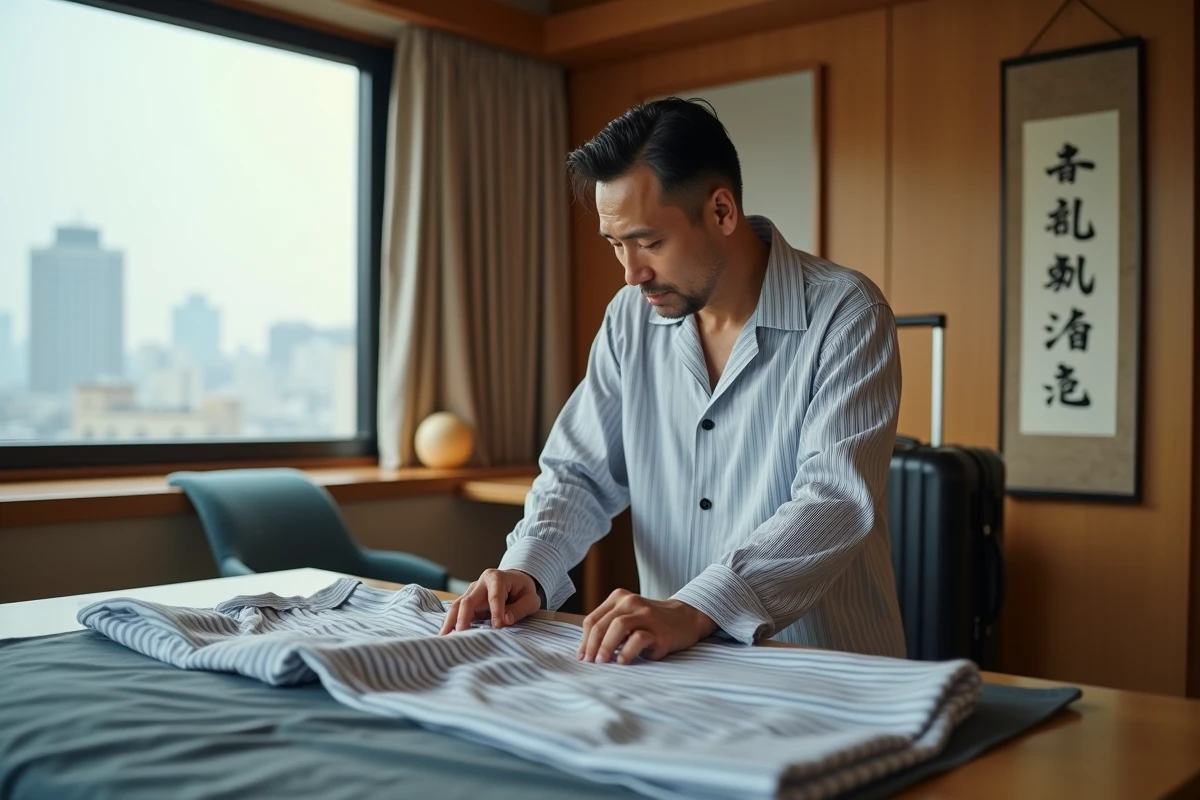
- Some travelers recount the surprise of finding each evening a perfectly ironed yukata, ready to be worn after the staff’s visit.
- In the cities of Tokyo and Osaka, many mention this slight apprehension: making a faux pas by using the pajama or slippers incorrectly, often a topic of conversation with the teams on site.
- Mixed capsule hotels give rise to anecdotes where the diversity of practices requires adaptation and observation before acting, a good travel lesson.
In every capsule or hotel room, the ritual remains the same: donning the traditional Japanese pajama, crossing the communal bathroom, encountering other travelers who apply the same rule of respect for customs. It is these small, repeated gestures that make the stay unforgettable, far beyond a simple borrowed or purchased garment.