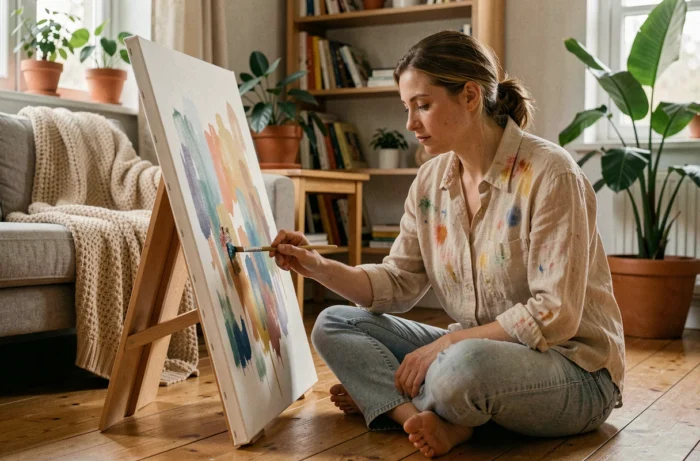
Choosing a leisure activity to relax does not simply come down to picking from a list of popular activities. The available budget, the level of fatigue at the end of the day, the proximity of facilities, or the desire to limit screen time guide the choice towards very different practices. The leisure ideas that actually work in daily life are those that adapt to these constraints, not those that require reorganizing one’s life.
Filtering Leisure Activities by Budget, Energy, and Access to Facilities
The usual content on relaxation leisure offers long lists without ever addressing the question of actual cost. Price remains a major barrier to accessing leisure for a significant portion of the French population. Recommending a gym membership or creative workshops to someone with a tight budget amounts to suggesting an impractical solution.
The first useful framework crosses three parameters: recurring cost (free, a few euros per month, subscription), required energy level (active, moderate, passive), and dependence on a location or equipment. A brisk walk outdoors costs nothing, requires little mental energy, and needs no equipment. An escape game involves a budget, social energy, and travel. Both are valid, but not for the same moments or the same people.
Several ideas around leisure on the site officielnews.com illustrate this diversity of formats, from family board games to cultural outings in the city.
- Free and equipment-free leisure: walking, running, stretching, reading in a library, drawing, free writing. Accessible in both rural and urban areas.
- Moderate-cost leisure: board games (one-time reusable purchase), balcony gardening, creative cooking with everyday ingredients, yoga or meditation apps.
- Leisure requiring an investment or travel: spa, supervised workshops, team sports in clubs, cultural outings (museum, guided tour, show).
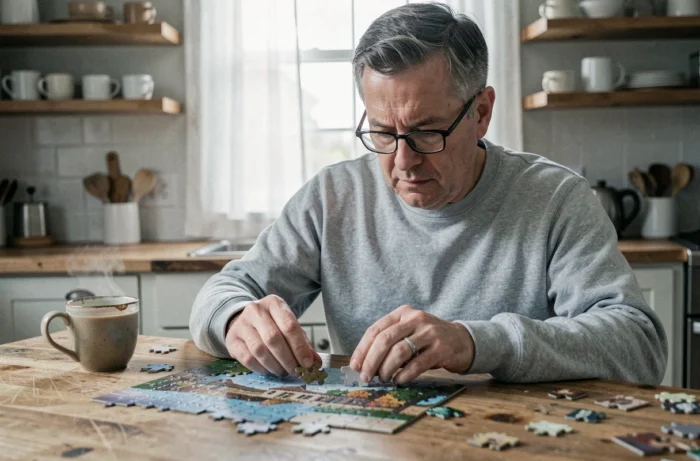
Screen-Free Leisure: Growing Autonomous Practices
Tolerance for screens is a criterion rarely mentioned in leisure guides. After a day of work on a computer, following up with a video game or streaming does not provide the same break effect as a manual or physical activity. The change in sensory register matters as much as the activity itself.
Autonomous sports practices are gaining ground over structured formats. Running, home weight training, yoga via app: these leisure activities do not depend on a fixed schedule or registration. Their flexibility explains their growing adoption, especially among those with variable work schedules.
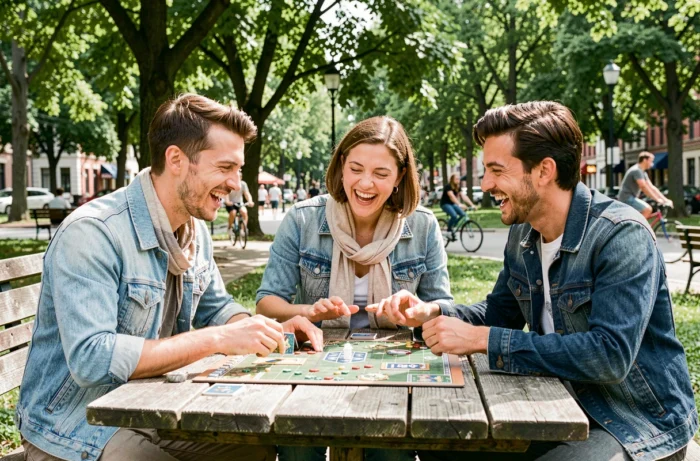
Board games are also experiencing a resurgence of interest as a social leisure activity at home. They combine social interaction, absence of screens, and limited entry cost. For a family with children or a group of friends, a game night easily replaces a more expensive outing while meeting the need for human connection.
Concrete Alternatives for Areas Lacking Facilities
The place of residence strongly influences access to cultural and sports leisure activities. In rural areas, the absence of a gym, cinema, or creative workshop nearby reduces options if one sticks to structured leisure.
Outdoor activities then take on a different dimension: hiking, nature observation, gardening, creative DIY. These leisure activities do not depend on any infrastructure and adapt to the seasons. The trade-off: they sometimes require more personal initiative to maintain regularity.
Regularity in Relaxation Leisure: Short Sessions Rather Than Long Ones
French public health recommendations emphasize a point that most leisure lists overlook: regularity is more important than intensity. Incorporating short periods of activity into the day (brisk walking, stretching, a few minutes of reading) produces more lasting effects on stress than a single long weekly session.
This observation changes the way one thinks about leisure. Rather than reserving a two-hour slot on the weekend for an ambitious activity, it is more effective to scatter active micro-breaks throughout the week. Ten minutes of drawing in the morning, a walk at lunchtime, a chapter of a novel in the evening: these fragments accumulate.
Field feedback varies on the minimal useful threshold. What emerges is that even very short sessions, as long as they are frequent, maintain a more stable level of relaxation than a leisure activity practiced sporadically.
Concrete Criteria for Choosing a Leisure Activity Suitable for Daily Life
Before adopting a new activity, four questions can help avoid quick abandonment:
- How much real free time is left after daily obligations? If the answer is less than thirty minutes, prioritize divisible leisure activities (reading, sketching, stretching).
- What is the level of physical and mental fatigue at the end of the day? Nervous fatigue calls for a sensory leisure activity (music, cooking) rather than an additional cognitive effort.
- Does the activity require travel or specific equipment? The less a leisure activity depends on external conditions, the more likely it is to last.
- Does the leisure activity involve a screen? If so, and if the day has already been saturated with screens, the relaxation benefits may be limited.
These criteria do not disqualify any activity. They simply help verify that a leisure activity chosen out of desire remains compatible with the real constraints of daily life. A pottery workshop can be a remarkable source of relaxation, but if it requires an hour of travel on a weekday evening, the logistical constraint ultimately cancels out the sought benefit.
The leisure activity that truly relaxes is the one practiced without organizational effort, often enough to produce a cumulative effect. Neither the price nor the prestige of the activity guarantees anything in this regard.