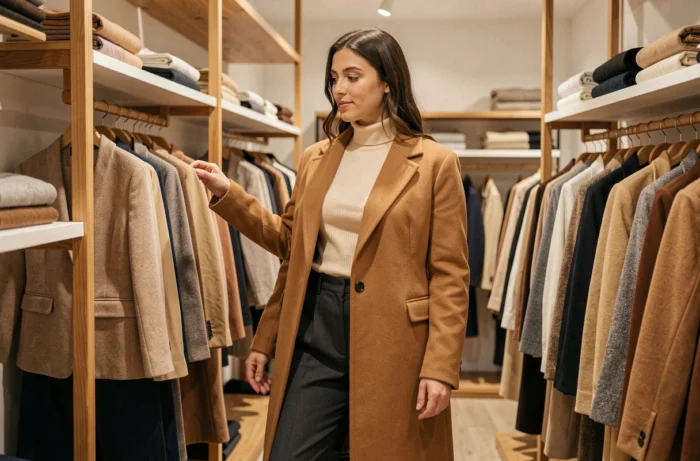
Choosing an item of clothing is not just about following a color or a cut spotted on a runway. Behind seasonal fashion trends, the French clothing market is undergoing a contraction phase, with sales values still lower than those of 2019 according to the French Institute of Fashion. This context prompts a rethinking of how to build a wardrobe, prioritizing pieces that are actually worn rather than a constant renewal.
Eco-contribution and ultra-fast fashion law: what changes for buyers
Since September 1, 2026, the law n° 2026-602 of July 8, 2026 has concretely modified the French clothing landscape. This text establishes a modulation of eco-contributions based on three criteria: the range of products offered by a brand, the frequency of new releases, and the repair services provided to consumers.
In practice, brands that renew their collections at a very high rate see their costs increase. This gradually affects selling prices. For consumers, the direct consequence is simple: disposable clothing will cost more to produce and sell.
This mechanism makes reparability an economic criterion, and no longer just a marketing argument. Before buying a jacket or pants, checking the strength of the seams, the availability of spare buttons, or the possibility of having a hem taken up becomes a cost-effective reflex. Pieces designed to last better absorb this new regulatory reality than short-use items.
To compare quality-price ratios between brands and identify durable pieces of the season, the fashion section on Le Comparatif gathers detailed analyses by clothing category.

Second-hand and pre-owned clothing: a reflex that has become structural
Second-hand is no longer a niche market reserved for vintage enthusiasts. The French Institute of Fashion indicates that second-hand purchases represented 10.9% of clothing value in the first quarter of 2025, with particularly strong penetration among 18-34 year-olds.
This figure reflects a lasting change in habits. Buying a coat or a pair of shoes second-hand is no longer a financial compromise; it is a consumption mode in its own right. Several factors explain this shift:
- The perceived quality of second-hand items has improved thanks to platforms that authenticate and accurately describe the condition of articles
- The acquisition cost of a high-end second-hand piece remains significantly lower than that of a new one, providing access to materials and finishes that would otherwise be unattainable
- The environmental dimension weighs in the decision, especially since French regulations explicitly penalize textile overproduction
Second-hand does not prevent following fashion trends. Straight cuts, structured blazers, or thick knits circulate abundantly in the resale market a few months after their release.
Materials and construction: concrete criteria for choosing clothing wisely
The composition of a fabric determines its durability much more than its brand or displayed price. Reading the label remains the most reliable gesture for evaluating a purchase.
Natural, synthetic fibers, and blends
A merino wool or cashmere sweater retains its shape after dozens of washes. An acrylic sweater pills quickly. The percentage of natural fiber in the blend directly conditions the longevity of the garment.
For summer pieces (t-shirts, light dresses), cotton remains a safe bet as long as the weight is checked. A fabric that is too thin will deform after the first wash. Linen, stiffer to wear, gains flexibility over time and handles hot seasons very well.
Finishes that reveal quality
Even before looking at the label, three details allow you to judge a garment in a few seconds:
- Inner seams: regular topstitching and wide seam allowances indicate careful assembly
- Buttonholes: a clean buttonhole, without loose threads, signals skilled craftsmanship
- The fabric’s resilience: by gently stretching the textile between two fingers, a quality fabric returns to its original shape without retaining deformation

Building a versatile wardrobe: focusing on multifunctional pieces
The versatility of a garment is measured by the number of different outfits it can be integrated into. A navy blazer worn over straight jeans on Monday can be paired with a midi dress on Friday. Three to four versatile pieces can replace ten specialized items.
This logic particularly applies to the autumn-winter transitions, a period when the temptation to accumulate layers is strong. A mid-season jacket in boiled wool or thick cotton covers most days from October to December in much of France, without requiring an additional jacket for every temperature variation.
Neutral colors (navy, heather gray, ecru, brown) facilitate this approach. They combine effortlessly and allow for the addition of a more vibrant piece, such as a burgundy sweater or a mustard scarf, without upsetting the outfit.
Style is not built through accumulation. A wardrobe focused on well-cut pieces made from solid materials produces more coherent looks than a closet full of clothes worn only once. In a market where prices are rising due to regulation and where the contraction of sales is pushing brands to rethink their offerings, concentrating purchases on fewer, better-chosen pieces remains the most reliable strategy.