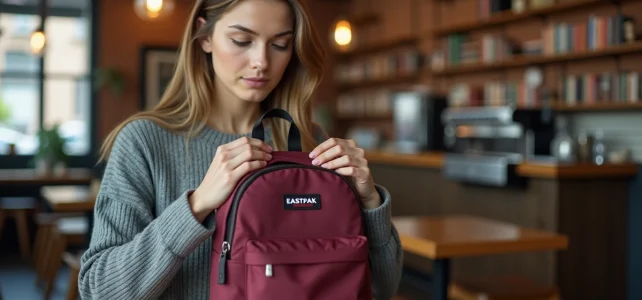
Zipper that catches, slightly misaligned logo, fabric too soft to the touch: the clues that separate a genuine Eastpak bag from a counterfeit lie in details that most buyers do not check. Counterfeits sold online represent a significant share of the market, and French customs have intensified seizures in recent years, including on mainstream brands like Eastpak. Knowing where to look before paying makes all the difference.
Technological authentication tools: what filters out fake Eastpaks today
Second-hand platforms no longer rely solely on visual inspection to validate a bag. Solutions like Entrupy, which analyzes fibers at a microscopic level, are now used by players such as Vestiaire Collective or Monogram to authenticate items from mainstream brands, not just luxury.
This use of artificial intelligence and material analysis is changing the hierarchy of checks. An individual seller on a traditional marketplace does not have access to these tools. Buying on a platform that includes this type of verification reduces the risk of encountering a counterfeit, even for a backpack priced under 80 euros.
To delve into visual checkpoints before a purchase, Fashionova’s fashion tips detail five concrete steps that can be applied without specific equipment.
Zipper, Cordura fabric, and logo: the three physical checkpoints
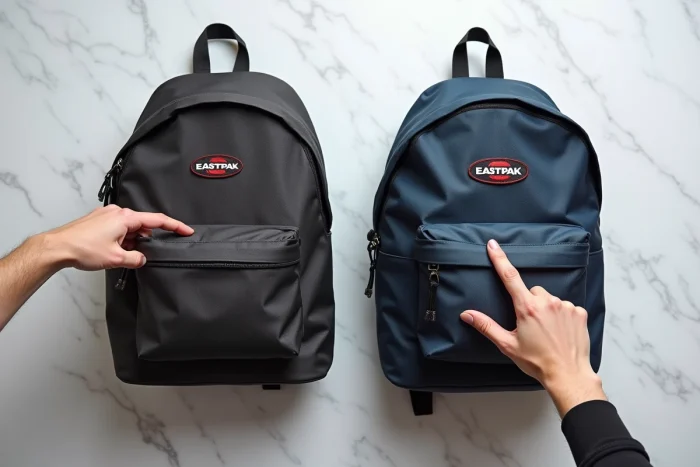
Eastpak counterfeits have improved. Some copies incorporate barcodes and internal stitching that are close enough to the original to fool an untrained eye. Three areas of the bag remain the most reliable for distinguishing the authentic from the copy.
| Checkpoint | Genuine Eastpak | Common Counterfeit |
|---|---|---|
| Zipper | Marked YKK or engraved “EASTPAK”, heavy metal, smooth glide | Light plastic or thin metal, no marking or blurry marking |
| Main fabric | Thick, rough-touch Cordura nylon, wrinkle-resistant | Thin, smooth fabric, wrinkles easily |
| Exterior logo | Sharp embroidery, well-centered, bright colors (red, white, black) | Irregular embroidery, loose threads, dull or misaligned colors |
| Interior label | White background, mention of country of manufacture, sometimes a serial number | Blurry typography, absence of serial number, vague information |
The zipper as the first filter
This is the quickest test. On a genuine Eastpak, the zipper is metal, heavy, and bears the YKK or EASTPAK engraving directly on the pull tab. A plastic zipper or one without inscription immediately raises doubts.
A zipper that catches or squeaks almost always indicates a counterfeit. Originals use zippers designed to withstand years of daily use.
The Cordura fabric test
The Cordura nylon used by Eastpak has a characteristic rough texture. By pinching the fabric between two fingers, an original offers a firm resistance. A thin fabric that folds effortlessly betrays a counterfeit.
The most advanced copies mimic the color, but rarely the density of the weave. This tactile test remains reliable even when the visual appearance is convincing.
Fake Eastpak outlets online: scam mechanisms to spot
Customs seizures are no longer limited to airports. A single control at Roissy resulted in the seizure of 25,000 counterfeit bags in one operation. Online sales amplify the phenomenon, with recurring patterns that are easy to identify once known.
- Showcase sites displaying permanent discounts of 60 to 70%, without an official sale period or clear legal mentions.
- The absence of a verifiable physical address or a functional customer service number on the online store.
- Product photos identical to those on the official Eastpak site, but descriptions filled with errors or automatically translated.
- A price significantly lower than the usual rate for the Padded Pak’r model, which falls within a known range for authorized resellers.
An Eastpak sold at half price outside of sale periods deserves systematic verification. These fake outlets replicate a pattern observed in other mainstream accessory brands, with ephemeral sites that disappear after a few weeks of selling.
30-year Eastpak warranty: an often-overlooked authentication lever
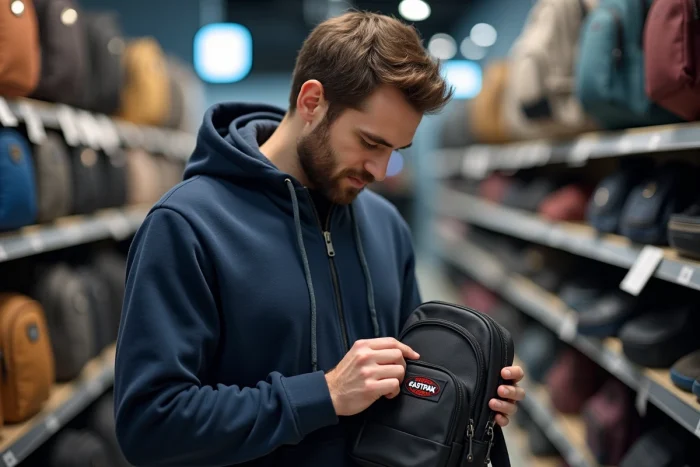
Eastpak offers a 30-year warranty on its products. This exceptional duration for a backpack serves as a verification tool in itself. An authentic bag purchased from an authorized retailer can be sent to the brand’s after-sales service for repair or replacement.
If the seller does not mention the 30-year warranty or refuses to provide proof, the bag is likely a copy. Counterfeiters cannot offer this service, and any attempt to claim the warranty on a fake will be rejected by Eastpak.
This criterion complements physical checks. A hesitant buyer can ask the seller to confirm in writing that the manufacturer’s warranty applies. Refusal or evasion is a sufficient signal to abandon the purchase.
Eastpak counterfeits exploit the trust placed in a brand whose price remains accessible. Physical checks (zipper, Cordura, logo) remain the first reflex, but buying on platforms that integrate technological authentication and verifying the 30-year warranty form a more comprehensive safety net. A seller who cannot guarantee either is not worthy of your trust.